
Cannabis-Derived Terpenes vs Artificial Flavoring: Why It Matters
As legal cannabis markets continue to grow, consumers are encountering a wider range of products than ever before. Vapes, concentrates, infused flower, and other formulations now make up a large share of retail sales.
Within these products, flavor and aroma are often central to the experience.
The source of those aromas, however, can vary widely.
Some cannabis products rely on terpenes that originate directly from the cannabis plant, while others incorporate terpenes derived from non-cannabis plants or synthetic flavoring compounds designed to imitate fruit or candy profiles.
Understanding this difference helps consumers better evaluate the composition of cannabis products and how they reflect the chemistry of the plant itself.
For those who value authenticity and botanical integrity, the origin of terpene content matters.
Terpenes Define the Aromatic Identity of Cannabis
Terpenes are aromatic compounds produced naturally within cannabis trichomes. They are responsible for the plant’s scent, flavor, and much of its chemical character.
When cannabis flowers are cultivated and harvested carefully, these terpenes remain present in the resin that coats the plant.
Each cultivar expresses its own combination of terpene compounds.
Common examples include:
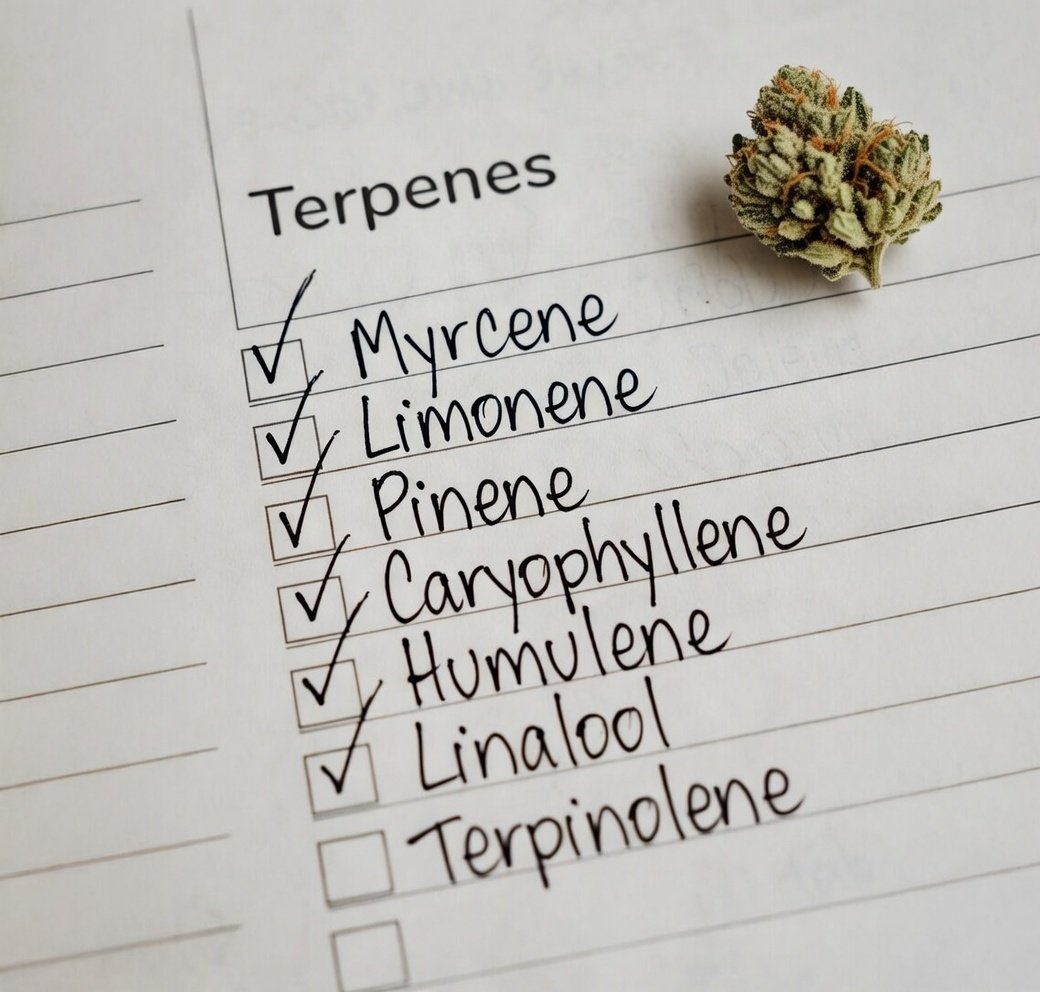
Beta-caryophyllene, which often contributes peppery or spicy aromas
Limonene, associated with bright citrus notes
Myrcene, known for earthy and herbal characteristics
Pinene, which introduces fresh pine or forest-like aromas
Linalool, often linked with floral tones
These compounds rarely appear individually. Instead, they combine into complex aromatic profiles that define the identity of each cannabis variety.
Preserving those profiles requires careful cultivation, extraction, and formulation.
Cannabis-Derived Terpenes Preserve Plant Authenticity
Cannabis-derived terpenes are extracted directly from cannabis plants.
During certain extraction processes, producers are able to separate terpene fractions from the plant material while preserving their natural chemical structure.
These terpene fractions can then be reintroduced into cannabis concentrates, vape cartridges, or infused products.
Because these terpenes originate from cannabis itself, they closely resemble the aromatic profile that exists in the original plant.
This approach maintains a stronger connection to the plant’s natural chemistry.
Consumers who value authenticity often seek products that preserve these cannabis-derived terpene profiles.
The result is an aroma and flavor experience that more closely reflects the character of the plant.
Non-Cannabis Terpenes Are Widely Available
Terpenes are produced across the plant kingdom, which means many terpene compounds can be sourced from other plants.
For example:
Limonene can be extracted from citrus peels
Pinene can be derived from pine needles or rosemary
Linalool is commonly sourced from lavender
These compounds are chemically identical to those produced by cannabis plants.
Because they are widely available in other plant sources, they are sometimes used in cannabis formulations.
When used carefully, these botanical terpenes can recreate certain aromatic characteristics found in cannabis.
However, terpene blends built from non-cannabis plants may not fully replicate the complex terpene ratios naturally produced by cannabis cultivars.
Artificial Flavoring Is Different from Terpene Chemistry
Artificial flavoring compounds represent a separate category.
These compounds are designed to mimic flavors associated with candy, fruit beverages, desserts, or other food products.
They may not reflect terpene chemistry at all.
Instead, they rely on flavor molecules commonly used in food manufacturing.
In cannabis products, artificial flavoring can create recognizable tastes such as bubblegum, cotton candy, or tropical punch.
While these flavors may appeal to some consumers, they do not reflect the botanical chemistry of the cannabis plant.
For consumers seeking an experience rooted in cannabis itself, artificial flavoring can move the product further away from the plant’s natural identity.
Authentic Terpene Profiles Support Plant Character
Cannabis cultivars develop terpene profiles gradually during flowering.
These profiles evolve alongside cannabinoid production inside the plant’s trichomes.
The resulting terpene balance reflects genetics, environmental conditions, and harvest timing.
When products preserve these terpene profiles, they carry forward the chemical fingerprint of the plant.
Consumers who value this botanical authenticity often seek products formulated with cannabis-derived terpenes rather than artificial flavoring systems.
The difference can often be recognized through aroma.
Products built around authentic terpene profiles tend to present layered, complex scents rather than singular candy-like notes.
Terpene Preservation Requires Careful Handling
Regardless of terpene source, preserving aromatic compounds requires careful handling throughout the production process.
Terpenes are volatile and sensitive to environmental exposure.
Heat, oxygen, and light can cause terpene molecules to evaporate or degrade.
To protect terpene content, cannabis producers focus on several key factors:
controlled drying and curing environments
gentle extraction methods
airtight packaging
stable storage conditions
These steps help preserve the aromatic compounds present in the final product.
Maintaining terpene integrity ensures that the aroma and flavor experienced by consumers remain true to the plant.
Transparency Through Laboratory Testing
Modern cannabis testing laboratories can measure both cannabinoid potency and terpene composition.
These analyses help document the chemical profile of each production batch.
Testing laboratories identify terpene concentrations and verify cannabinoid levels while also screening for contaminants.
These results are compiled into Certificates of Analysis, which provide a detailed breakdown of the product’s chemical composition.
COAs offer consumers an opportunity to review the laboratory data associated with the products they purchase.
Updated Certificates of Analysis and product information can be accessed at:
Consumers can also verify product availability through the official Silly Nice brand page on Weedmaps.
These resources provide insight into both product chemistry and retail distribution.
Flavor Should Reflect the Plant
Cannabis has developed its aromatic complexity over millions of years of plant evolution.
Terpenes represent one of the most distinctive elements of that chemistry.
When cannabis products preserve these natural compounds, the experience reflects the botanical identity of the plant itself.
Understanding where terpene flavors originate helps consumers make more informed decisions about the products they choose.
For those interested in cannabis as a plant rather than simply a flavor system, terpene authenticity remains an important part of the conversation.